

By Ron Womble
rwomble@morningsun.net
FRONTENAC, Kan. -- Some days, it seems, Debbie Restivo might kill for a corn dog – steaming fresh from the fryer and maybe a little mustard on the side. But Restivo knows that little indulgence – something most of us take for granted -- could land her in a hospital emergency room.
Restivo is among a growing number of Kansans living with Alpha-gal Syndrome as the result of a bite from a Lone Star tick. According to the Centers for Disease Control (CDC) alpha-gal syndrome (AGS) is “a serious, potentially life-threatening allergy to alpha-gal that can develop after a tick bite.
Alpha-gal is a molecule (galactose-α-1,3-galactose) that is produced in the bodies of most mammals but not in people. It is also found in the saliva (spit) of some ticks and can be transferred into a human’s blood through their bite.
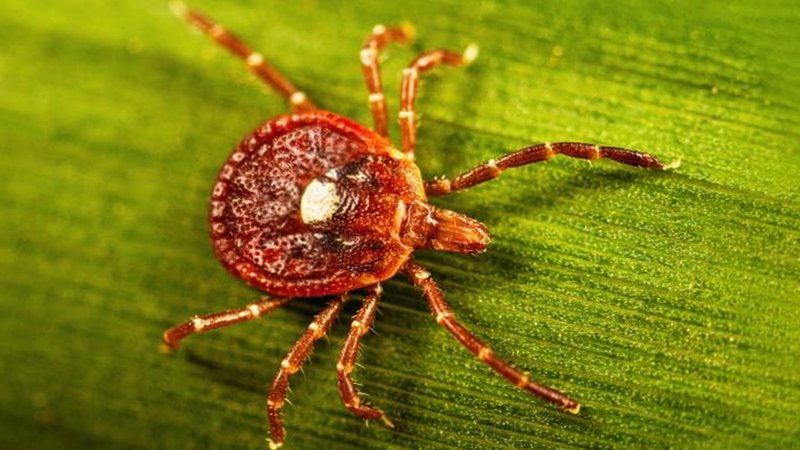
The human body’s immune system identifies the alpha-gal molecules as a threat, which triggers an allergic reaction. People with AGS experience symptoms after they eat red meat or use products that contain mammal products. Hence the nickname, red-meat allergy.
Restivo said she was first diagnosed with AGS in January of 2017. She said she experienced symptoms following a tick bite and her healthcare provider, Patricia Sullivan, DNP, had her blood tested.
“She sent me to KU,” Restivo said. “She’s such a perfectionist.”
Restivo said her symptoms were similar to what many others have experienced and usually came on hours after a meal.
“I had fatigue,” she said. “Eight to 10 hours after I ate, even, I was woken in the middle of the night with a serious reaction. One time we were at Table Rock, 12 miles away from the hospital and I woke up in the middle of the night and they had to rush me to the hospital. I was in acute respiratory distress.”
Since her diagnosis, Restivo avoids red meat.
“I have chicken and turkey. Luckily I don’t have any problems with dairy. If I take a bite of (any other meat), I’m running the risk of having anaphylaxis,” she said.
And just in case, she carries an EpiPen in her purse.
Because alpha-gal is not a reportable disease, data on its prevalence in Kansas is sometimes not complete, but it appears to be growing as the Lone Star tick, the primary vector for alpha-gal spreads in the state.
Symptoms of alpha-gal, according to the CDC can include hives or itchy rash; stomach pain or cramps; nausea; vomiting; heartburn and indigestion; cough; shortness of breath or difficulty breathing; swelling of the lips, throat, tongue or eye lids; anaphylaxis requiring immediate medical attention.
The best defense against alpha-gal and other tick-borne diseases, according to the CDC, is prevention. That is even more problematic as an early spring and a changing climate have provided a welcome climate this year for ticks in Kansas.
And alpha-gal is not the only or necessarily the most serious disease that ticks can transmit. The most common tickborne illnesses, according to K-State Extension, include Ehrlichiosis, Spotted Fever Rickettsioses, Lyme disease and Tularemia. Two less common tickborne viruses, Heartland virus and Bourbon virus, have also been identified in Kansas.
The CDC offers extensive advice on preventing tick bites and information on commercially available tick repellents at CDC.gov. The agency’s advice includes being aware of areas where ticks are likely to be encountered and treating clothing and camping gear with products containing 0.5% permethrin. The EPA offers a list of registered insect repellents for use on the skin. After being outside, check yourself carefully for ticks (some can be no bigger than a pin head) and remove them. Showering soon after coming indoors can help remove ticks and has been shown to reduce the risk of getting Lyme disease and possibly other tickborne illnesses.
The CDC advises removing a tick as soon as it is found, as the length of time a tick is attached affects the possibility that it can transmit disease. Using tweezers or fingertips, grab the tick as close to the surface of the skin as possible and pull away with a firm, steady pressure – do not twist or jerk the tick – until it releases. After removing the tick clean the area with soap and water or alcohol.
Debbie Restivo remembers fondly the days when she could swing into Sonic for a corn dog or chili dog on a whim, but she’s discovered that she can live without them. She said she gets her blood checked routinely and hopes that one day, like some others, she will again be able to sit down to a burger or a steak without fear.